


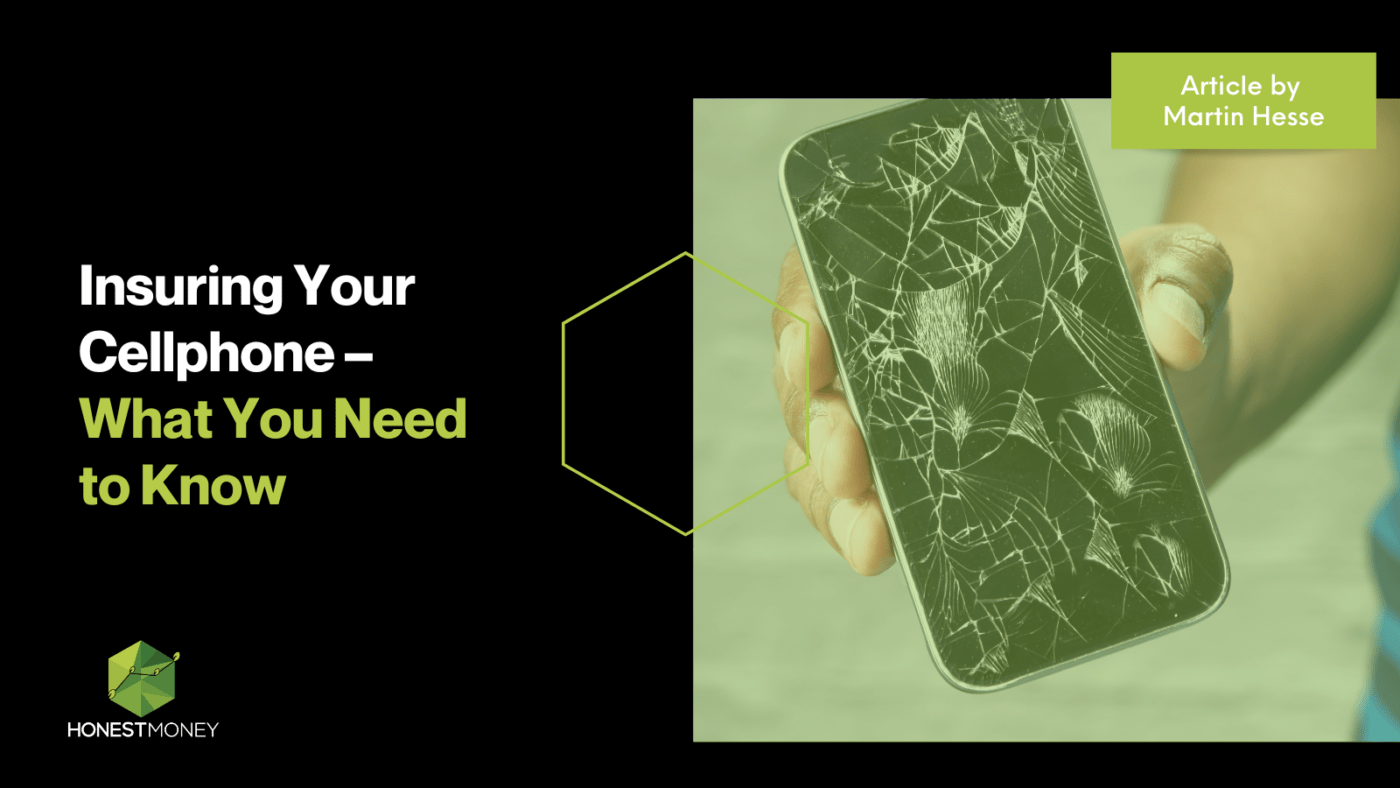
Your cellphone is a relatively expensive item for its size and can be easily lost, stolen or damaged. There are various ways to insure your device, and it’s important to know where and when these different types of cover would apply.
• Standalone cellphone policy: This is offered by the cellphone networks and providers. You may take out this type of policy when you buy or upgrade your phone under a new cellphone contract. The premium, which may be relatively low, is added to your monthly contractual payment. Vodacom, for example, offers a low-cost policy that only covers accidental damage, including water damage, but not loss or theft, or you can opt for a higher-cost comprehensive policy that covers damage, loss and theft.
• All-risks cover: If you have a short-term insurance policy covering your possessions, it probably includes a section on all-risks cover: this covers items that you take out of the house, such as jewellery, bicycles, and lap-top computers. For your cellphone to be covered under this section of your policy, like other high-value items (the threshold is typically around R2 000), it would have to be specified in the contract, which would add an amount to your premium.
• House contents cover: If you have insurance for your household contents, your cellphone will be included under that cover, but only if the damage or loss occurs when the phone is inside your home – for example, if you have a break-in and the phone is stolen.
When deciding which type of cover best suits your needs, you need to compare premiums, terms and conditions of each type of policy, and the excess amount you need to pay from your own pocket in the event of a claim.
When claims are rejected
The Non-Life Insurance Division of the National Financial Ombud Scheme (NFO) receives numerous complaints from consumers about problems with their cellphone insurance policies – typically that a claim was rejected or the sum received was less than expected.
The Lead Ombud of the Non-life Insurance Division, Edite Teixeira-McKinon, recently warned consumers about the limits of their cover, particularly about the fact that most standalone policies cover your device only when used with a specified SIM (Subscriber Identity Module) card. This reduces the risk to the insurer, linking the cellphone to your cellphone network account and reducing fraudulent claims. The Regulation of Interception of Communications Act (RICA) also requires every SIM card to be formally registered to a verified person’s identity and address.
Teixeira-McKinon says most of the cellphone-related complaints received by her division concern claims rejected because the device did not contain the specified SIM card. However, she says that to successfully reject a claim on these grounds, the insurer must demonstrate that the consumer was advised when taking out the policy that the SIM card had to be registered under RICA and would only be covered if the registered SIM card was in the device.
“In a matter dealt with by our division, the complainant submitted a claim for a tablet that was snatched from his toddler through an open car window. The insurer rejected the claim on the grounds that the SIM card was not blacklisted following the robbery.
“According to the complainant, he was not advised at the inception of the policy that the SIM card had to be registered in accordance with RICA. Further, there was no SIM card in the tablet as it was used only by his toddler via wi-fi. As the SIM card was not registered, it could not be blacklisted. The insurer acknowledged the complainant’s unique usage of the tablet and agreed to abide by the NFO’s recommendation to settle the claim,” Teixeira-McKinon said.
In another case, where a phone was insured under a complainant’s all-risk policy, the complainant had upgraded her phone without letting her insurer know – thus it was her old phone that remained specified under the policy.
“It was pointed out to the complainant that the claim was not within the ambit of the policy wording,” Teixeira-McKinon said.
In a third case, a phone was insured under a policy that required proof of theft. According to the ombud, the complainant said he had left his phone in his car’s cubby hole to run some errands. When he returned to his vehicle, the device was missing.
“The policy required that to enjoy cover for loss resulting from theft from an unattended vehicle, the vehicle must be locked, the device must be concealed in the cubby hole or boot, and the loss must be accompanied by forcible and violent entry into the vehicle. The complainant was adamant that he had locked the vehicle; however, there was no evidence of forced entry and therefore the insurer’s rejection of the claim was upheld,” Teixeira-McKinon said.
How to avoid rejection
Teixeira-McKinon recommends that, to ensure cover, you:
• Register your SIM card, ensuring it is RICA-compliant and formally linked to your identity.
• Check the policy wording: read the fine print carefully, especially clauses about specified SIM cards or unattended theft.
• Update your cover: notify your insurer immediately when you replace or upgrade your phone.
• Specify your devices under all-risks or household content policies
• Conceal your phone if you leave it in the car and ensure the car is locked.
• Regularly review your policy and premiums to avoid overpaying for depreciating devices while keeping replacement values updated.
To contact the NFO, telephone: 0860-800-900, WhatsApp: +27 (0) 66 473 0157, or Email info@nfosa.co.za
